By Rob Wilson:
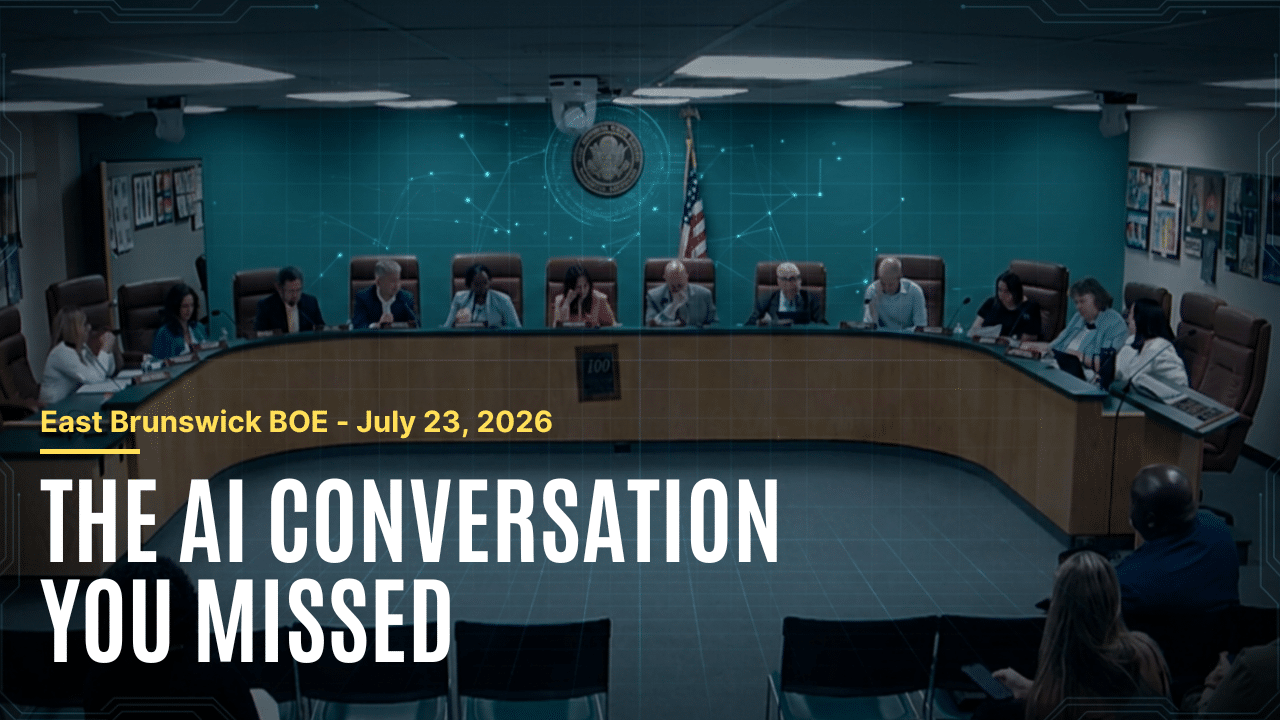
While watching the July 23 East Brunswick Board of Education meeting, one brief conversation caught my attention. It was not the longest discussion of the night, and I would guess many people watching may have moved right past it.
It was about artificial intelligence.
The district discussed the growing role of AI and the importance of understanding how this technology fits into education. Like many industries, schools are trying to figure out how to adapt to a tool that is already changing the way people learn, work, and solve problems.
For me, this was one of the most interesting parts of the meeting because I have been seeing this shift happen firsthand in my own business.
AI Is Not Replacing the Human Element
Over the past year, I have been using AI tools like Claude extensively in my own business. Claude, created by Anthropic, is an artificial intelligence assistant that can help analyze information, organize complex projects, identify patterns, and assist with problem solving.
The biggest thing I have learned is that AI does not remove the human element. It creates more room for it.
Claude is not coming up with my ideas, making my decisions, or replacing my experience. The strategy is still mine. The creativity is still mine. The final judgment is still mine. What AI does is give me another set of eyes.
It helps me review information faster, identify areas that need improvement, uncover opportunities, and spend more time on the decisions that actually require experience.
That same concept is what makes AI so interesting for education.
During the BOE meeting, Dr. Mammon talked about the reality of balancing the responsibilities of leading a school district with the demands of everyday life, including the excitement of welcoming a new baby. It was a simple reminder that the people making these decisions are also people managing a tremendous amount of responsibility.
That is the same challenge I face in my own work.
There are always immediate tasks that need attention. There are deadlines, questions, and problems that need to be solved. But some of the most valuable work is often the easiest to push aside because it is not urgent.
Looking for ways to improve.
Reviewing what is already working and what is not.
Finding problems before they become bigger problems.
Building better systems.
AI helps create the space to do both.
In my business, I can continue building new projects while also reviewing existing work, finding opportunities, correcting past issues, and improving processes. For a school district, the same idea could mean helping leaders analyze feedback, identify trends, organize information, and bring attention to areas that may otherwise be overlooked.
The AI is not making the decisions.
The superintendent still needs judgment. The teacher still needs the ability to connect with students. The business owner still needs experience and creativity.
The difference is that AI can help people get to better decisions faster.
That is the part many people misunderstand about artificial intelligence. The value is not that a computer thinks for us. The value is that it helps us think better.
What Could This Mean for Education?
This is where I think the connection to East Brunswick schools becomes exciting.
The same way AI can help me review information, find patterns, and identify opportunities in my business, it has the potential to help educators and administrators do the same.
Imagine a superintendent who has better tools to analyze feedback, identify trends, organize information, and bring attention to areas that may otherwise be overlooked.
The AI does not replace the superintendent’s experience.
It gives the superintendent more information to use that experience.
A teacher’s ability to connect with a student cannot be automated. A school leader’s understanding of a community cannot come from software. Relationships, empathy, and judgment will always matter.
But if technology can reduce repetitive work and help leaders see more clearly, it creates more time for the parts of education that only people can provide.
That is where AI becomes interesting.
East Brunswick’s Conversation Is Worth Watching
Education is not always known for moving at the same pace as technology. There are good reasons for that. Schools have a responsibility to think carefully about any change that impacts students, families, and staff.
At the same time, technology continues to move forward whether organizations are ready or not.
The districts that succeed will not be the ones that ignore AI. They will be the ones that learn how to use it responsibly while keeping people at the center.
I think East Brunswick deserves recognition for having this conversation. The AI discussion during the BOE meeting was brief, but it pointed toward a much larger question about the future of education.
I would actually like to hear more from the district’s technology leadership about how they see AI evolving over the next several years. Not just from a policy standpoint, but from an innovation and efficiency standpoint.
Because the most exciting part of artificial intelligence is not what the technology can do by itself.
It is what people can do when they have better tools.