During Good of the Cause at the June 4 East Brunswick Board of Education meeting, East Brunswick Education Foundation Chairman Jack Levitt delivered both praise and a warning.
Levitt began by congratulating the Board of Education for what he described as a dramatic turnaround over the past year.
“You went from being disorganized with infighting to a cohesive, productive, engaged board that makes great decisions and that’s earned the community’s trust,” Levitt said.
But after praising the board’s progress, he shifted to a concern he believes could threaten that trust.
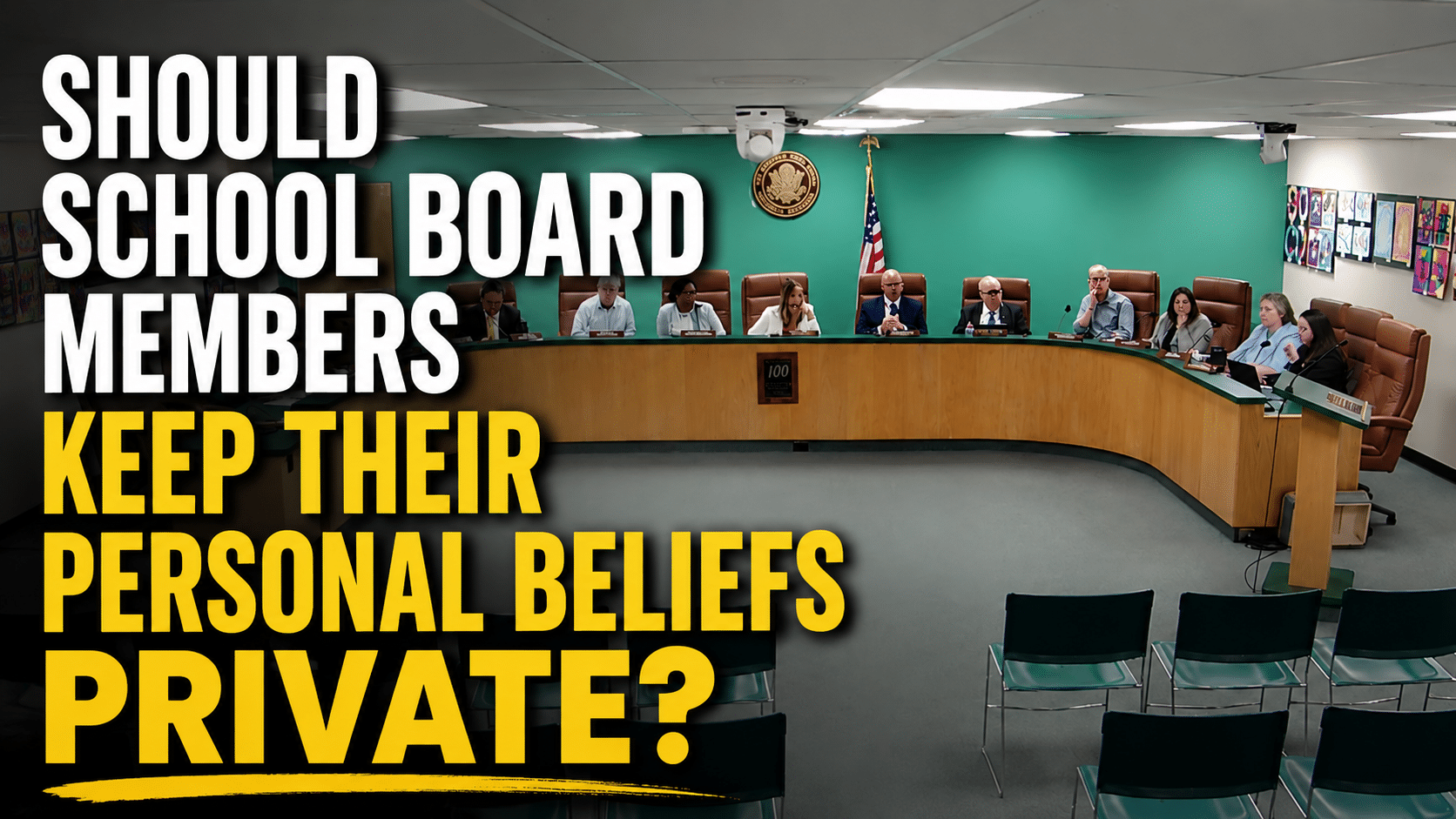
His comments centered on an issue that extends far beyond East Brunswick: Should school board members publicly express their personal beliefs, political affiliations, and support for causes, or should they remain publicly neutral in order to represent the entire community?
A Board Built on Trust
Levitt argued that the board’s recent success is rooted in public confidence.
“I believe it was able to happen because the community selected members of the board they trust would represent all the students in our schools regardless of race, religion, neurodiversity, political affiliation, etc.,” he said.
That statement serves as the foundation for the rest of his argument.
According to Levitt, school board members occupy a unique position. Unlike officials elected to partisan offices, they are responsible for making decisions that affect every student, parent, teacher, and taxpayer in the district.
Because of that, he believes they should hold themselves to a different standard.
What Behaviors Concerned Him?
Levitt did not mention any board member by name, nor did he reference any specific social media post.
Instead, he spoke broadly about public behavior that he believes can create perceptions of favoritism or bias.
“That means that as board members you need to abstain from a lot of behaviors,” Levitt said.
He specifically mentioned:
- Endorsing political candidates
- Posting signs for candidates
- Appearing with candidates on social media
- Showing outward support at cultural events
His concern was not necessarily about the private beliefs of board members.
Rather, it was about what happens when those beliefs become public.
The Discussion Went Beyond Politics
While much of Levitt’s remarks focused on political endorsements and social media activity, he also spoke about cultural representation.
In addition to mentioning political candidates and campaign activity, Levitt referenced “showing outward support at cultural events” and later suggested that board members should be cautious about appearing to advocate for some groups while failing to show support for others.
That broadened the conversation beyond partisan politics.
East Brunswick is one of New Jersey’s most diverse communities. Residents come from a wide range of religious, cultural, ethnic, and political backgrounds. In recent years, national and international events have sparked difficult conversations in communities across the country, including discussions surrounding Israel, Palestine, antisemitism, Islamophobia, cultural identity, and representation.
Levitt never specifically referenced any particular group or event. However, his comments touched on a question many communities continue to face: How should public officials engage with cultural causes and community groups while still maintaining the confidence of the entire community?
For some residents, attending cultural events is simply part of being an engaged community leader. For others, those appearances can sometimes be interpreted as taking sides.
That appears to be the concern Levitt was expressing.
The Difference Between Private Beliefs and Public Trust
One of the most striking parts of Levitt’s remarks was his distinction between private opinions and public actions.
“Regardless of what your private beliefs are, I’m concerned that some of this trust may be coming into jeopardy,” he said.
He went on to say that recent social media activity had caused some residents to question the objectivity of certain board members.
“Without going into details, there have been recent posts on social media that have caused concern for members of the community that there are board members who in showing political support have made other community members question their objectivity.”
That statement gets to the heart of his concern.
The issue, in his view, is not whether board members are entitled to personal beliefs. The issue is whether publicly displaying those beliefs affects how the community views their ability to represent everyone equally.
Are School Board Members Different From Other Elected Officials?
Perhaps the strongest statement in Levitt’s remarks was this:
“Unlike most elected offices, the Board of Education is not political.”
That idea may sound obvious to some people and controversial to others.
School boards oversee budgets, facilities, curriculum, staffing, transportation, and student services. They are not legislative bodies and do not pass laws.
Yet in recent years, school boards across the country have increasingly found themselves at the center of debates involving politics, culture, religion, curriculum, public health, and identity.
Some residents believe school board members should remain above those debates whenever possible.
Others argue that elected officials should be transparent about their beliefs and values because voters have a right to know where they stand.
Levitt clearly falls into the first camp.
Should Board Members Keep Their Personal Beliefs Private?
Levitt did not leave much ambiguity on that point.
“It’s critical that any board members keep their private beliefs to themselves,” he said.
That statement raises a larger question that many communities continue to wrestle with.
Is it realistic to expect elected officials to keep their personal beliefs private?
Board members are not only public officials. They are also residents, parents, voters, volunteers, and community members.
They attend events, support causes, participate in civic organizations, and maintain social media accounts.
Many would argue that they should not be expected to stop expressing opinions simply because they were elected to office.
Others would argue that once someone accepts the responsibility of governing a school district, certain sacrifices come with the position.
Levitt’s comments suggest he believes public neutrality is one of those sacrifices.
The Argument for Neutrality
Supporters of Levitt’s viewpoint would likely argue that public trust matters just as much as actual decision-making.
Even if a board member is completely fair and objective, public displays of political or cultural support may create doubts among families who disagree with those positions.
The concern is not necessarily bias itself.
The concern is the appearance of bias.
A parent who sees a board member publicly supporting one political candidate, movement, organization, or cultural cause may begin to wonder whether that official can fairly represent families who hold different views.
For those who agree with Levitt, avoiding those situations altogether is the best way to preserve trust.
The Argument Against Neutrality
Others would likely see the issue very differently.
They would argue that school board members do not surrender their First Amendment rights when they are elected.
Like any citizen, they have the right to support candidates, attend events, express opinions, and participate in public life.
Some would argue that transparency is actually beneficial because it allows voters to understand what elected officials believe rather than forcing them to hide those beliefs.
Under that view, the problem is not that board members have opinions.
The problem would only arise if those opinions affected their official decisions.
A Closing Challenge
Levitt ended his remarks with perhaps his strongest statement of the evening.
“Board members, if it’s important enough to advocate for some groups over others, or to not show support for certain cultures, maybe being on the Board of Education is not the best place for you to be serving your community.”
It was a direct challenge, but also a reflection of how seriously he views the role of a school board member.
A Debate Without an Easy Answer
No discussion followed Levitt’s comments.
Board members listened and moved on to the next item on the agenda.
But his remarks touched on a question that many communities continue to face.
Should school board members publicly endorse candidates, causes, and movements?
Should they remain neutral in public while serving in office?
Can elected officials fully separate their personal beliefs from their public responsibilities?
And perhaps most importantly, what matters more: the right of an elected official to express personal beliefs, or the public’s confidence that every student and family is represented equally?
Reasonable people can disagree on the answer.
What is clear is that Levitt believes trust is one of the Board of Education’s most valuable assets, and that protecting it requires a level of restraint that many other elected officials may never be asked to practice.
We queued this part up for you.