
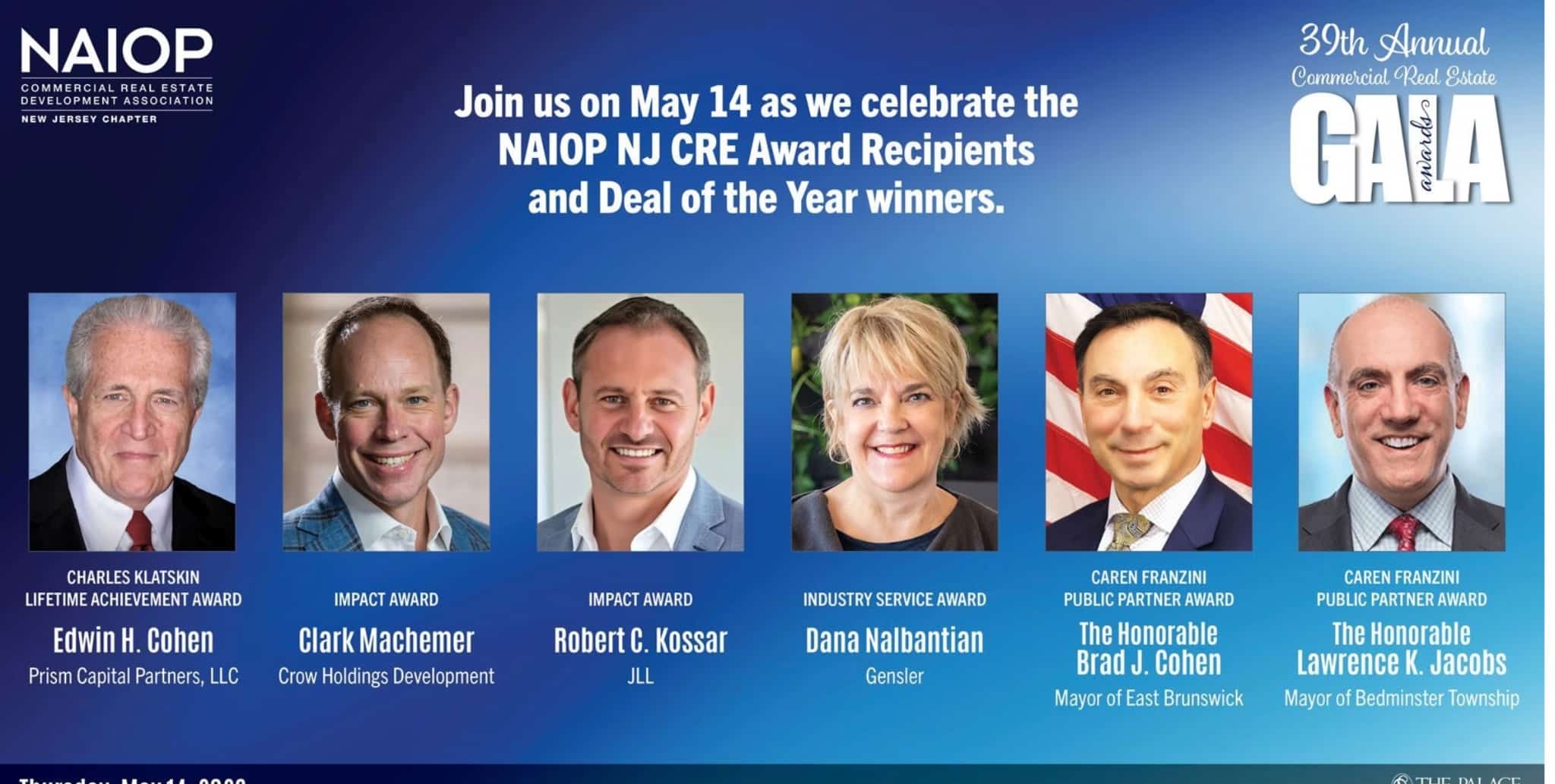
So let me get this straight. A commercial real estate development organization is giving an award to a mayor in a town where residents are actively debating overdevelopment.
Congratulations… or am I missing something?
What Is This Event, Anyway?
This isn’t just some random dinner. This is a major event hosted by NAIOP, a commercial real estate development association made up of developers, investors, and companies behind large scale projects across New Jersey.
There’s nothing unusual about them giving awards. That’s what organizations like this do. They recognize people and projects that help move their industry forward.
So Why Give a Mayor an Award?
The award being given is called a “Public Partner Award.” That wording matters.
It’s not “Community Advocate” or “Resident Voice.” It’s “Partner.”
Typically, this kind of recognition goes to public officials who work well with development. That can include supporting projects, helping navigate approvals, or creating an environment where building and investment can happen more easily.
There’s nothing inherently wrong with that. Development can bring tax revenue, business growth, and economic activity.
But it does raise a fair question.
Why This Feels Different Right Now
This isn’t happening in a vacuum.
In East Brunswick, there has been ongoing conversation about the pace and scale of development. Depending on who you talk to, concerns often include:
- Increased traffic
- Higher density
- Strain on infrastructure
- Whether the character of the town is changing too quickly
You don’t have to take a side to acknowledge that these conversations are happening and that people have strong opinions right now.
The PILOT Conversation That Keeps Coming Up
One topic that keeps surfacing alongside development is PILOT programs for residential properties.
For anyone not familiar, PILOT stands for “Payment In Lieu Of Taxes.” These agreements can change how tax revenue from a development is distributed and are often used to incentivize projects.
Supporters will say PILOTs help get projects done and can bring in new revenue.
Critics, however, point to concerns that keep coming up locally:
- Questions about how much of that money actually goes to schools
- Concerns when residential properties are included
- Ongoing conversations about school funding and deficits
And this is where things get a little more complicated.
Because while the technical explanations of PILOT programs are always available, many residents feel like they’re getting the explanation, not the outcome.
The Math People Keep Asking About
Beyond the optics, there’s also a practical question people keep asking.
What would these properties contribute if they were taxed the traditional way?
Under a standard property tax structure, revenue is typically shared between the municipality, the county, and the school system.
With PILOT agreements, that formula changes.
So naturally, people start wondering:
- What would those developments generate under normal taxation?
- How much would go to schools?
- Would it make a noticeable difference?
It’s not that people expect exact answers overnight. It’s that they’re asking the question at all.
And right now, that comparison isn’t something most residents have easy access to.
So How Does This Land?
When residents are already questioning development, and then see their mayor being recognized by a development organization, it’s fair to ask how that comes across.
Some will see it as progress and leadership.
Others might pause and wonder what exactly is being recognized, and whose priorities are being aligned.
Neither reaction is unreasonable.
Maybe It Is Nothing But Maybe It Is Worth Explaining
Maybe this is completely standard. Maybe mayors across the state receive similar recognition all the time. Maybe it simply reflects that East Brunswick is active and on the radar.
But when you combine ongoing development, questions about PILOT structures, and concerns about school funding, it is not surprising that people are connecting the dots.
And when people are asking these kinds of questions, they should be able to get clear answers.
Not spin. Not talking points. Just transparency.
What Do You Think?
This is not about accusations.
It is about asking questions that a lot of people in town are already thinking about.
How does this sit with you?


