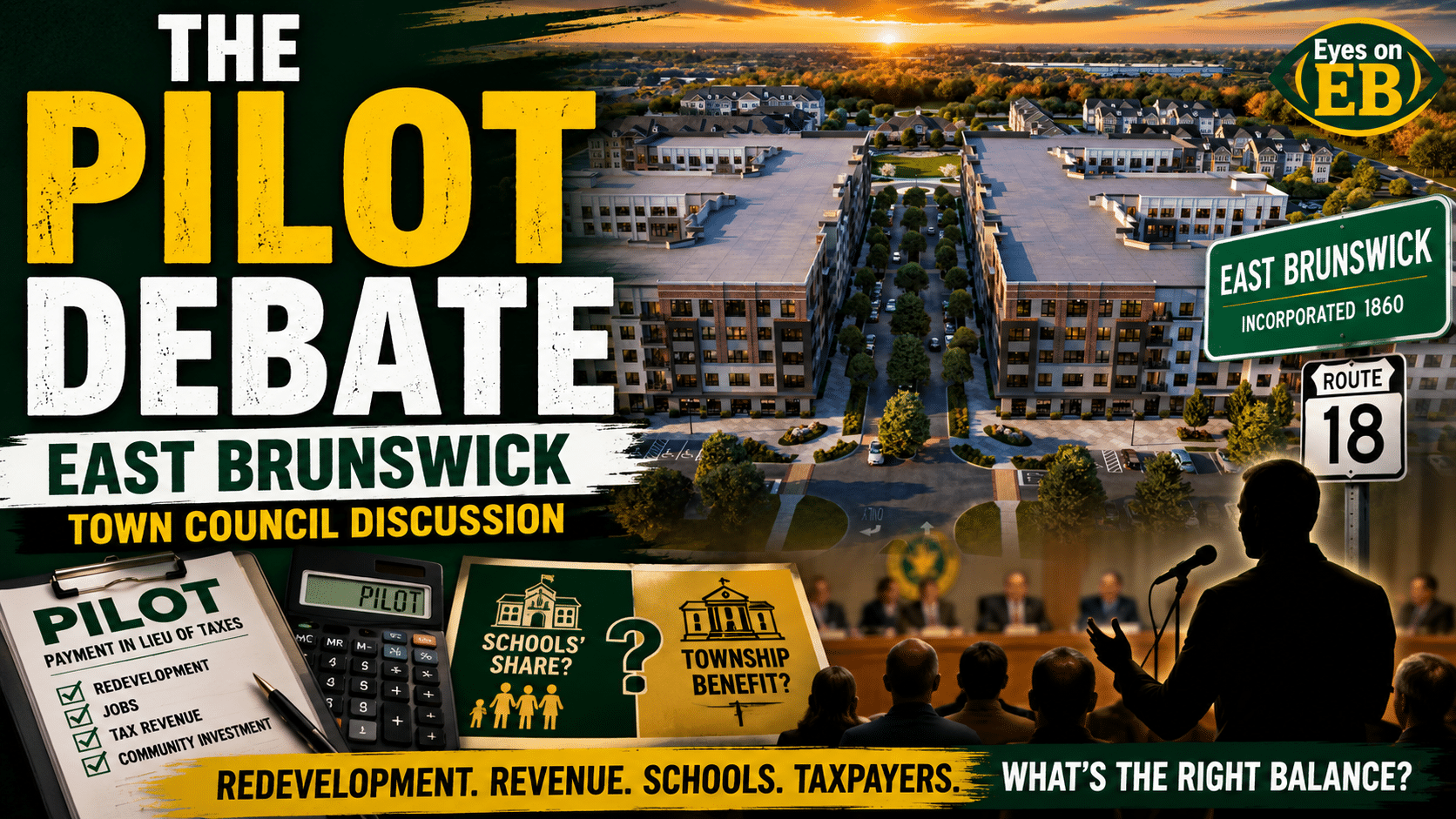
Township Administrator Joseph Criscuolo defended the township’s redevelopment approach during the recent Town Council discussion surrounding PILOT agreements, redevelopment, and school funding concerns.
Criscuolo explained that many of the properties involved in redevelopment projects were previously “underutilized” or “dilapidated” sites generating limited tax revenue before redevelopment efforts began.
He specifically referenced areas such as the former Wonder Bread property and Loemann’s Plaza, arguing that many of these sites had become financially stagnant before redevelopment.
“If you want to keep up with taxes and increases, you got to evolve,” Criscuolo said during the meeting.
The Township’s Position on School Funding
Criscuolo also pushed back on the idea that schools are directly losing operating budget money because of PILOT agreements.
“The board of ed still gets the land value on those agreements,” Criscuolo stated. He later added, “The school system gets all the money they ask for truly.”
Township officials argued that the school district still receives its approved budget through the existing budget and levy process.
The township’s broader position is that redevelopment projects create more value than leaving aging or struggling commercial properties untouched.
“Would you rather have us let the big developers just sit on that land and run those properties into the ground or revitalize the north end of town to make it something you could be proud of?” Criscuolo asked during the meeting.
The Capital Improvement Discussion
Another major point discussed during the meeting was that PILOT funds are legally restricted in their use.
Under state law, PILOT funds cannot simply be redirected into the school district’s day-to-day operating budget. Township officials explained that the money can instead be used for certain capital improvements involving schools and public facilities.
Council members pointed to improvements at Warnsdorfer School as one example of how PILOT-related funding has been used.
However, some residents argue that this distinction is a major source of frustration in the debate.
While capital improvements may help fund physical projects and facility upgrades, those funds cannot directly address many of the operational concerns currently dominating school discussions, including staffing pressures, layoffs, future layoffs, recurring educational costs, and program concerns.
For some residents, those feel like two very different conversations entirely.
Broader Concerns From Residents
Some residents also argue that while capital improvements are important, they do not necessarily solve the immediate financial concerns many parents and taxpayers are focused on right now.
Others point out that East Brunswick still has ninth graders attending Churchill Junior High School rather than the high school itself, which remains part of the broader conversation surrounding school facilities, long-term planning, and educational priorities.
Because of that, some residents feel examples such as parking lots, facility upgrades, or other capital projects do not fully address larger concerns surrounding operational funding pressures and the future direction of the school district.
Questions About Redevelopment Incentives
Some residents also remain skeptical of the idea that redevelopment would not happen at all without PILOT agreements.
Others question whether the issue is not redevelopment itself, but rather the size, scale, length, or financial structure of some of the agreements being approved.
Some argue there may be middle ground between leaving properties vacant and approving large redevelopment projects under long-term PILOT structures.
A Debate That Is Likely To Continue
The discussion made clear that most residents support improving blighted or outdated properties throughout East Brunswick. The larger debate is whether the structure of some redevelopment agreements is balanced fairly for taxpayers, schools, and the long-term future of the township.
As redevelopment continues throughout East Brunswick, discussions surrounding PILOT agreements, school funding, taxes, and future growth will likely remain a major topic at future Town Council meetings.